Pediatric
10 Signs Your Child May Need an Eye Exam
Dr. Sitora Karimova
2026-04-17
5 min read
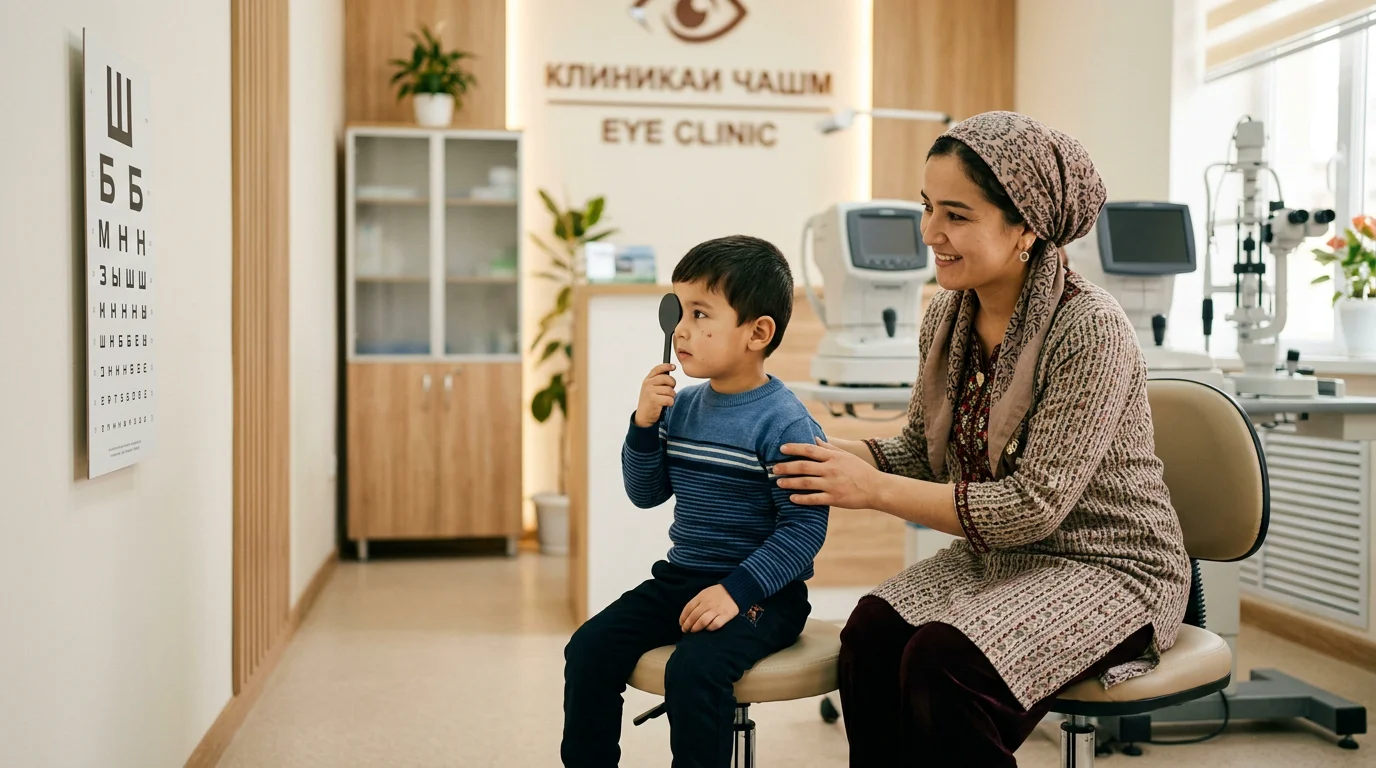
Children rarely complain about poor vision — because to them, the world they see *is* the only world they know. If your child has always struggled to see the board at school, they might simply assume that's normal. That's why it falls to parents and caregivers to watch for the signs that something isn't right.
As an ophthalmologist, I see this pattern often: a child comes in for their first eye exam at age 8 or 9, and it turns out they've been nearsighted for years. By then, they've been squinting through lessons, sitting too close to the TV, and falling behind in class — not because they aren't trying, but because they literally couldn't see clearly.
The good news: most childhood vision problems are treatable, especially when caught early. Here's what to watch for.
## Why Children Don't Tell You Their Vision Is Blurry
Unlike adults, children have no frame of reference for what "normal" vision looks like. If they've always seen the world in a certain way, they don't know to say "my vision is blurry." They adapt — leaning closer, squinting harder, tilting their head — without realizing these are signs of a problem.
This is especially true for amblyopia (lazy eye), where one eye gradually loses vision while the child remains unaware. Without early detection, amblyopia can lead to permanent vision loss that becomes much harder to treat in adulthood.
## 10 Signs Your Child May Need an Eye Exam
**1. Squinting or excessive blinking**
If your child squints at the TV, whiteboard, or when reading, it's often their way of compensating for blurry vision. Frequent blinking can also signal eye strain or difficulty focusing.
**2. Sitting too close to screens or holding books very near**
A child who consistently moves closer to the screen — or holds a book just inches from their face — may be nearsighted (myopic). This is one of the most recognizable early signs.
**3. Closing one eye or tilting their head**
This behavior often points to alignment problems (strabismus) or differences in vision between the two eyes. Tilting the head is the brain's way of trying to get a clearer image.
**4. Frequent headaches or eye fatigue**
Do they complain of headaches after school or after reading? Eye strain is a very common but under-recognized cause of headaches in school-age children. If the headaches consistently happen after near work, vision may be the culprit.
**5. Trouble concentrating or avoiding schoolwork**
When reading and writing are physically uncomfortable due to blurry or double vision, children often avoid them — or are labeled as inattentive. Vision problems are sometimes mistaken for learning difficulties.
**6. Complaints of blurry or double vision**
Take these complaints seriously, even if they seem intermittent. Double vision in particular can indicate a muscle imbalance that needs prompt evaluation.
**7. Constant eye rubbing**
While some rubbing is normal (tiredness, allergies), habitual rubbing throughout the day can indicate eye strain, dryness, or irritation — all of which an eye exam can help identify.
**8. Watery eyes or discharge**
Persistent watery eyes or discharge may point to an infection, blocked tear duct, or allergic reaction. In infants and toddlers, this is especially worth investigating.
**9. Poor hand-eye coordination**
Difficulty catching a ball, coloring inside the lines, or cutting with scissors can sometimes be linked to vision problems affecting depth perception and spatial awareness.
**10. Sensitivity to light**
If your child consistently avoids bright environments, squints in sunlight, or complains that lights are too bright, it's worth having their eyes checked.
## When Should Children Have Their First Eye Exam?
You don't have to wait for symptoms to appear. Proactive eye exams are recommended at these key ages:
- **By age 1** — A brief check to rule out major structural problems
- **Ages 3–4** — First comprehensive exam to detect lazy eye, strabismus, or significant refractive errors before school age
- **Ages 5–6** — Before starting school, to ensure vision supports learning
- **Every 1–2 years after** — More frequently if there's a family history of myopia, glasses, or eye conditions
Early school age is particularly important. Studies show that up to 80% of what children learn in school comes through vision — which means undetected vision problems can have a real impact on academic performance and confidence.
## What to Expect During a Pediatric Eye Exam
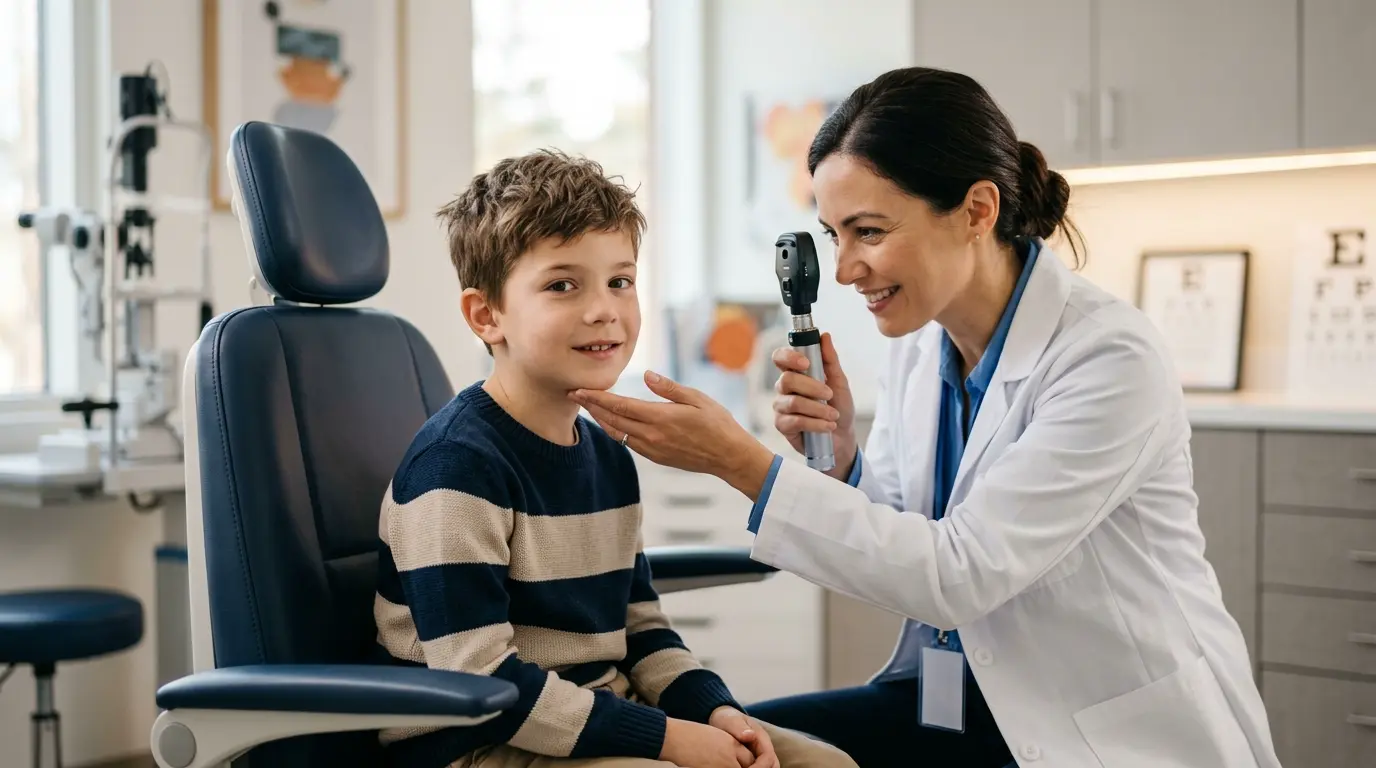
Many parents worry that their young child won't cooperate with an eye exam — but modern pediatric eye care is designed with children in mind. An exam typically involves:
- **Visual acuity testing** — Using age-appropriate charts (including picture-based charts for young children)
- **Refraction** — Determining whether glasses are needed
- **Eye alignment and movement** — Checking for strabismus or tracking problems
- **Eye health examination** — Looking at the front and back of the eye
The exam is gentle, non-invasive, and usually takes 20–40 minutes. Eye drops may be used to temporarily dilate the pupils for a more thorough look inside the eye — this is painless, though it can cause mild light sensitivity for a few hours afterward.
## What This Means for Families in Dushanbe
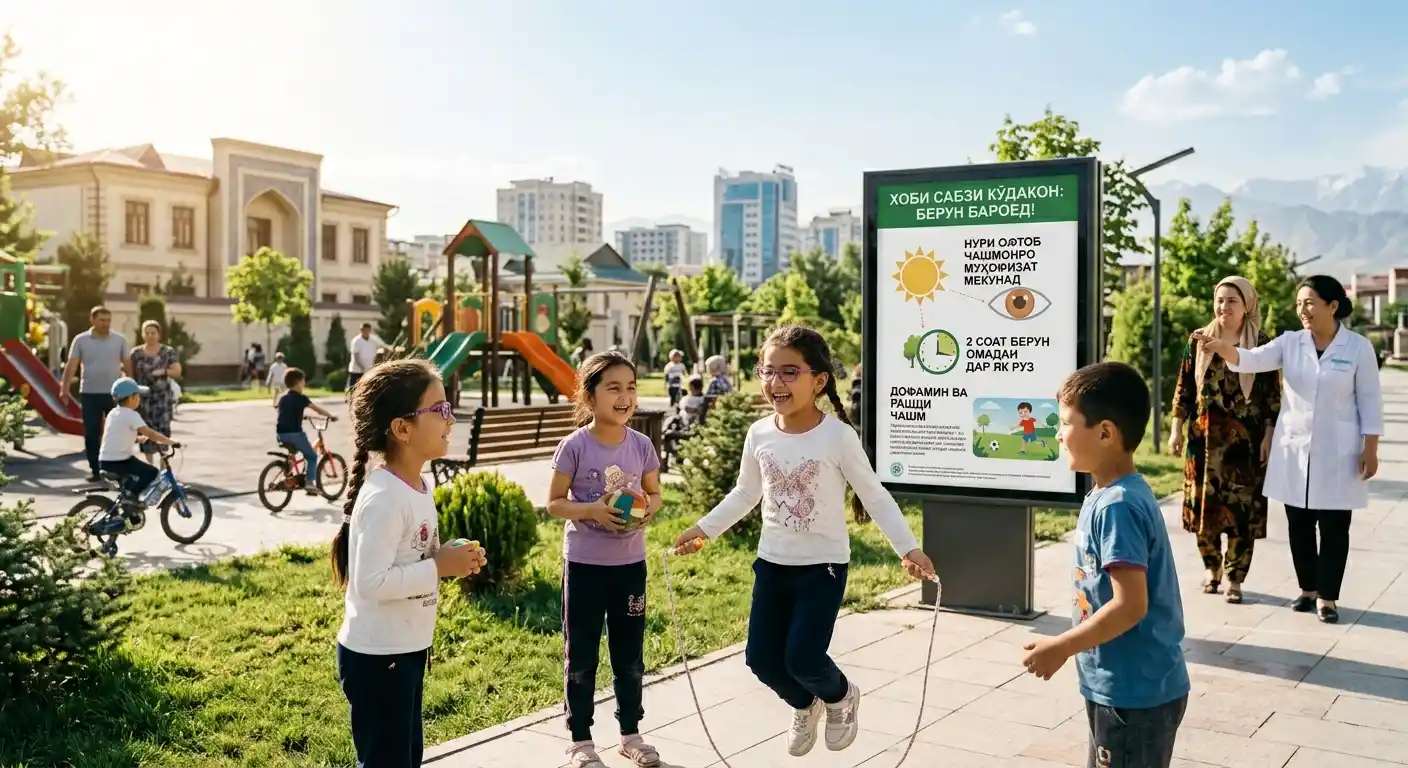
In Tajikistan, school-age myopia is rising — a trend seen across Central Asia and globally. Many families delay eye exams because children don't complain of vision problems. But by the time complaints arise, the condition may already be more advanced.
If your child shows even one or two of the signs described above, it's worth scheduling a check. Catching a refractive error at age 5 and fitting glasses is a simple intervention that can make a profound difference in a child's school performance, confidence, and long-term eye health.
*If you've noticed any of these signs in your child, don't wait — early detection makes all the difference. Call [+992 108 11 80 80](tel:+992108118080) to schedule a pediatric eye exam at our clinic.*
Source: InSight Vision Center (2026-04-16)
#children
#eye exam
#myopia
#amblyopia
#pediatric
#vision
Back to Blog
Share: