Research
The Gut-Eye Connection: How Your Digestion Affects Your Vision
Dr. Sitora Karimova
2026-04-13
5 min read

When most people think about protecting their eyesight, they think about UV sunglasses, reducing screen time, or getting a prescription check. Very few would think to look at their digestion. Yet a rapidly growing body of scientific research is revealing a surprising biological connection between the gut and the eyes — one that could reshape how we think about preventing some of the most serious eye diseases.
## What Is the Gut-Eye Axis?
The term "gut-eye axis" refers to the network of biological pathways through which the health of your gut microbiome — the trillions of bacteria, fungi, and other microbes living in your digestive system — can directly influence the health of your eyes.
Your gut is far more than a digestive organ. It houses roughly 70% of your immune system and produces hundreds of chemical compounds that travel throughout the body. When the balance of microbes in your gut is disrupted — a state called *dysbiosis* — it can trigger chronic low-grade inflammation that affects organs far from your stomach, including the delicate tissue at the back of your eye.
## How Gut Imbalance Harms the Eyes
The central mechanism linking gut health to eye disease is inflammation. When gut bacteria fall out of balance, harmful microbes release compounds that activate immune cells throughout the body. This triggers a cascade of pro-inflammatory molecules — cytokines such as IL-6, IL-1β, and TNF-α — that circulate in the bloodstream and can gradually damage vulnerable eye tissue.
Recent research published in early 2026 has now identified concrete connections between gut dysbiosis and several major eye conditions:
**Age-Related Macular Degeneration (AMD)**
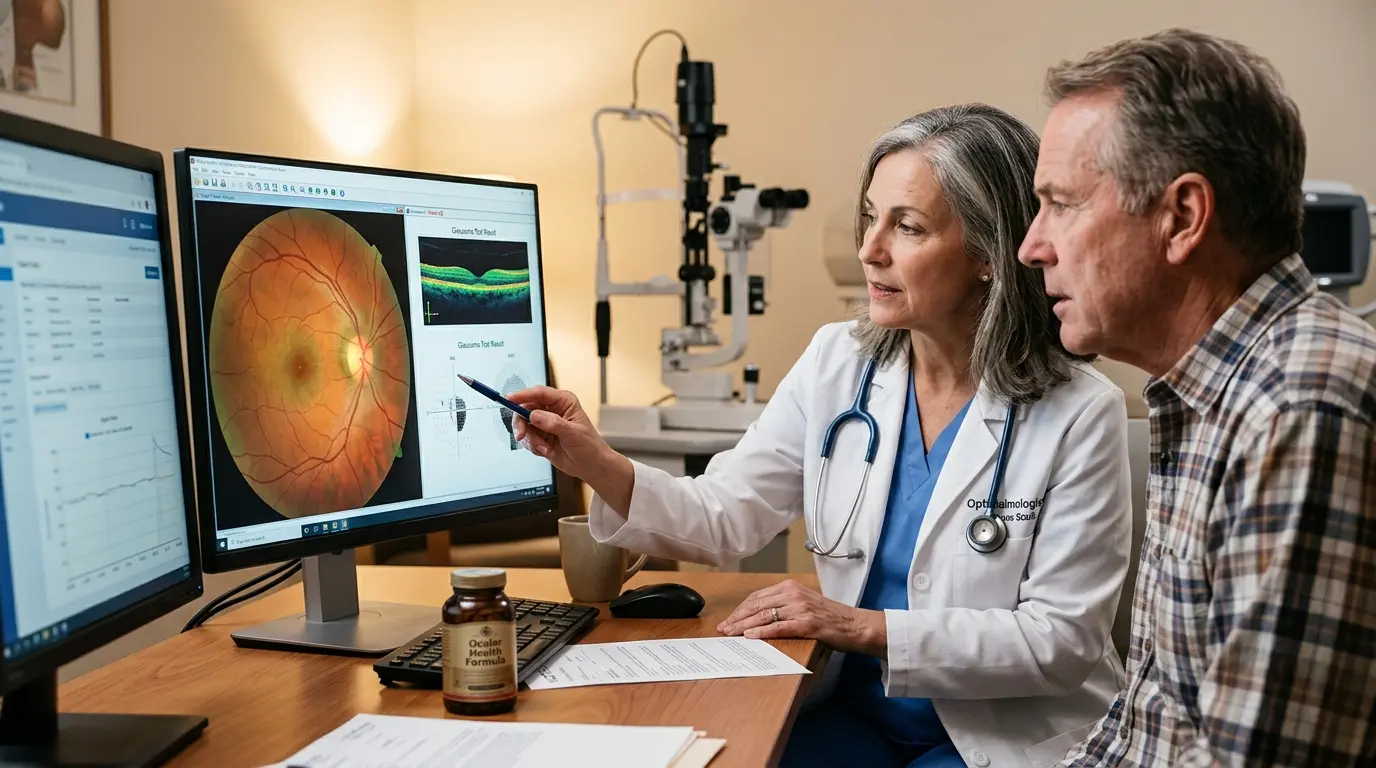
AMD is the leading cause of irreversible vision loss in adults over 50. Researchers have found that patients with AMD consistently show different gut microbiome profiles compared to healthy individuals. Gut imbalance can trigger the release of VEGF — a protein that promotes abnormal blood vessel growth in the retina — directly worsening the "wet" form of AMD. Multiple studies now describe the gut-retina axis as a key pathway in AMD development.
**Glaucoma**
A 2025 study in the *Journal of Neuroinflammation* found that glaucoma patients had significantly depleted levels of gut bacteria responsible for metabolizing tryptophan — an amino acid that plays a role in protecting nerve cells. Since glaucoma is fundamentally a disease of optic nerve damage, this finding suggests that gut health may influence one of the central biological pathways of the disease.
**Dry Eye Syndrome**
The gut microbiome regulates the production of short-chain fatty acids and other compounds that control the body's inflammatory response. An imbalanced gut may contribute to the chronic low-grade inflammation that drives dry eye syndrome — increasingly common among people who spend long hours in front of screens.
**Diabetic Retinopathy and Uveitis**
Researchers have also identified gut microbiome associations with diabetic retinopathy (retinal damage caused by diabetes) and uveitis (inflammation inside the eye), both of which are influenced by the systemic inflammatory environment that the gut helps regulate.
## What This Means for Patients Here in Tajikistan
This research does not mean that swallowing a probiotic will cure glaucoma or reverse macular degeneration. The science is still developing, and most findings come from laboratory studies and early-phase clinical research. But the direction is clear: **the health of your gut microbiome may be quietly influencing your long-term eye health.**
In Tajikistan, traditional diets rich in fermented dairy products like *qatiq* and *chakka*, fresh vegetables, legumes, and whole grains already provide natural support for a diverse gut microbiome. However, as processed and fast foods become more common — a trend seen across Central Asia — many people's gut health may be shifting in ways that could affect their eyes over time.
## Practical Steps to Support Both Gut and Eye Health
While targeted gut-eye therapies (such as probiotics specifically formulated for eye disease) are still being studied, there are practical steps you can take today that support both systems simultaneously:
1. **Eat more fiber.** Fiber feeds beneficial gut bacteria. Prioritize legumes, whole grains, fruits, and vegetables.
2. **Include fermented foods.** Traditional *qatiq*, kefir, and fermented vegetables naturally support microbial diversity.
3. **Eat omega-3 rich foods.** Fish, walnuts, and flaxseed reduce systemic inflammation and are known to support retinal health directly.
4. **Limit ultra-processed foods.** Highly processed foods disrupt gut microbial balance and promote systemic inflammation.
5. **Stay hydrated.** Adequate water intake supports both gut function and the tear film that protects your eye surface.
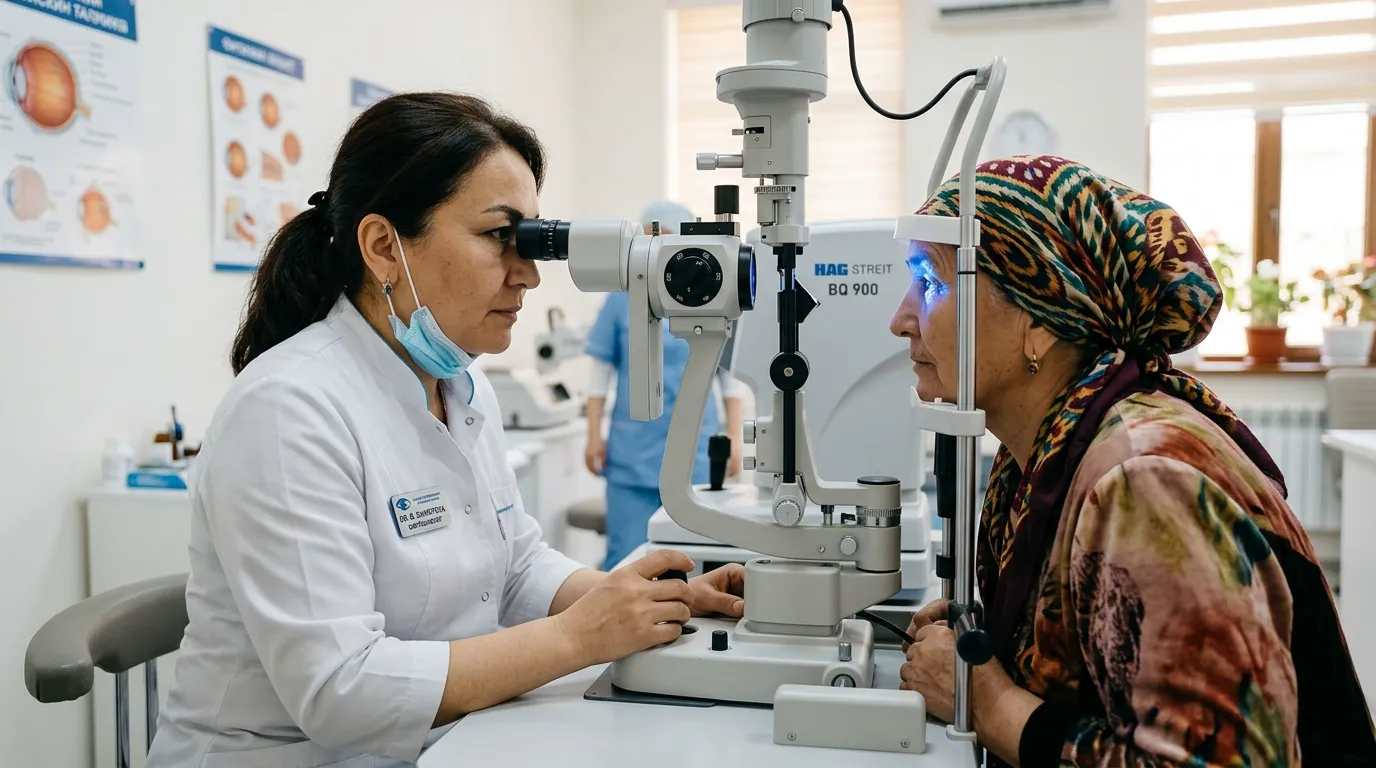
6. **Get regular eye exams.** Early detection of AMD, glaucoma, and other conditions dramatically improves treatment outcomes — no matter how good your diet is.
## The Bigger Picture
The discovery of the gut-eye axis reflects a broader shift in medicine: the recognition that the body works as an interconnected system, not a collection of isolated organs. Your retina is not separate from your immune system. Your immune system is not separate from your gut. The choices you make at the table may matter as much for your eyes as the time you spend in front of a screen.
As research in this area continues to advance, ophthalmologists and gastroenterologists are increasingly working together. A comprehensive eye health plan of the future may routinely include guidance on nutrition and gut health — a development that is both exciting and long overdue.
---
*If you are concerned about your vision or have risk factors for glaucoma or macular degeneration, early examination is always the best first step. Call [+992 108 11 80 80](tel:+992108118080).*
Source: Natural Eye Care (2026-04-03)
#gut-health
#microbiome
#macular-degeneration
#glaucoma
#inflammation
#prevention
Back to Blog
Share: