Prevention
Is Your Headache Actually an Eye Problem? 3 Vision Causes You Shouldn't Ignore
Dr. Sitora Karimova
2026-04-14
5 min read
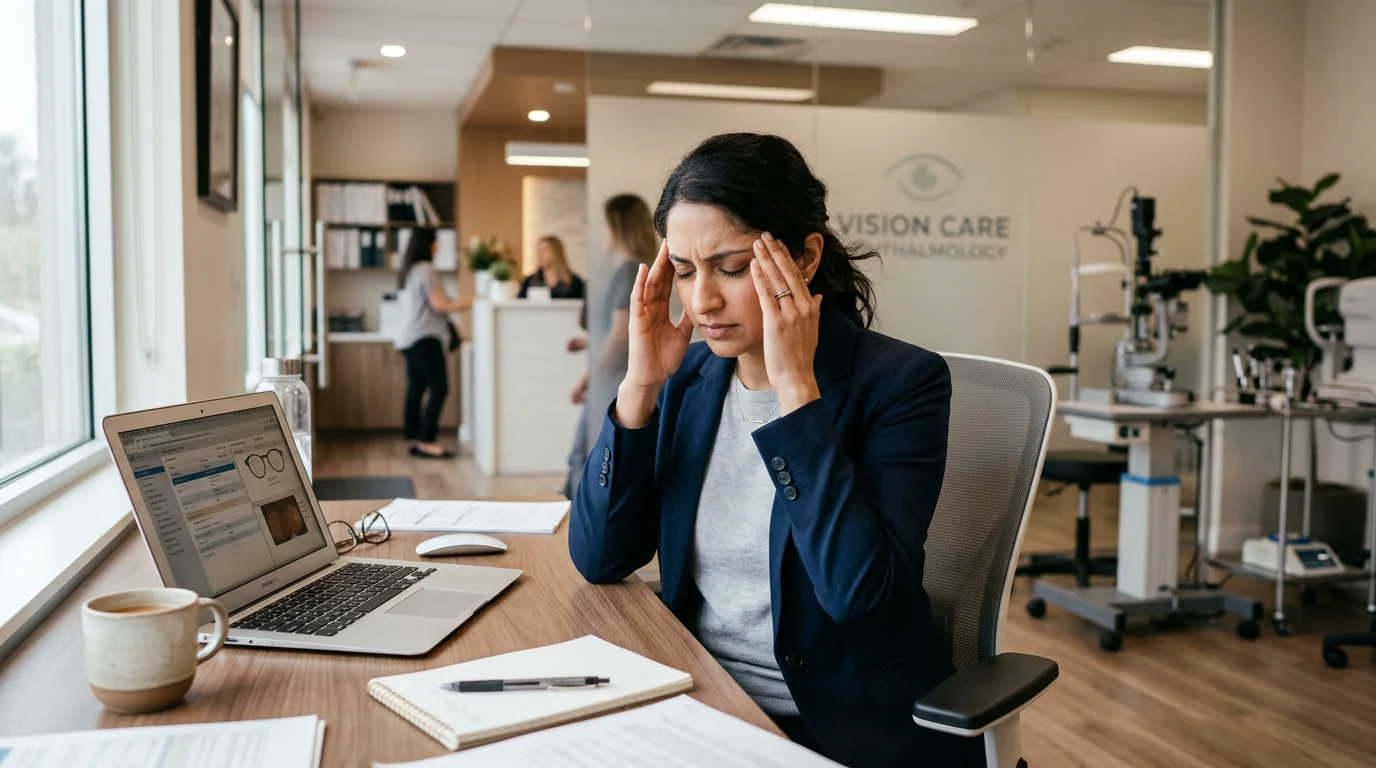
We've all had headaches. Most of us reach for a glass of water, a painkiller, or a nap — and move on. But if you find yourself getting frequent headaches that cluster around your eyes, temples, or forehead, the real culprit might not be stress or dehydration. It could be your vision.
At our clinic in Dushanbe, we regularly see patients who have been managing recurring headaches for months, only to discover that a simple eye condition was the underlying cause all along. Your visual system works constantly and silently to keep your world in focus — and when it's under strain, it doesn't always send obvious signals. Headaches are often one of the first.
Here are three vision problems that are frequently overlooked as headache triggers, and what you can do about each one.
## 1. Digital Eye Strain: The Screen-Time Epidemic
If your headaches tend to appear in the afternoon after long hours at a computer, phone, or tablet, digital eye strain is worth investigating. This condition — also called computer vision syndrome — has become increasingly common as screens have taken over our work and personal lives.
When we look at screens, we blink far less often than normal: research suggests we blink up to 50% less during screen use. This leads to the tear film on the eye's surface drying out more quickly, causing irritation, dryness, and fatigue. At the same time, screens demand sustained near-focus, which keeps the muscles inside your eye under constant tension for hours at a time.
The result? Tired, aching eyes — and headaches that radiate from the eye area to the temples and forehead.
**What to watch for:**
- Headaches that start after extended screen use
- Blurred vision after looking up from a screen
- Burning, stinging, or watery eyes
- Difficulty concentrating
**What helps:**
The 20-20-20 rule is a simple, evidence-backed habit: every 20 minutes, look at something at least 20 feet (6 meters) away for at least 20 seconds. This gives the focusing muscles inside your eye a brief but genuine rest. Other helpful steps include adjusting screen brightness to match your environment, positioning your screen slightly below eye level, and ensuring your workspace has good, even lighting.
## 2. Uncorrected Refractive Errors: When Your Eyes Are Working Too Hard
Nearsightedness (myopia), farsightedness (hyperopia), and astigmatism are all refractive errors — meaning light doesn't focus perfectly on the retina. When uncorrected or undercorrected, your eyes don't simply give up and show you a blurry world. Instead, they try to compensate, constantly adjusting the lens inside the eye to sharpen the image.
This effort — called accommodation — is automatic and largely unconscious. But it consumes real energy and creates real muscular tension. Over the course of a day, this sustained effort can fatigue the eye muscles and trigger tension headaches, especially around the brows, temples, and back of the head.
Farsightedness is a particularly sneaky cause of headaches, because people with mild to moderate hyperopia can often see reasonably well — their eyes are working hard to compensate, but they don't realize it. Children are especially vulnerable, because their accommodation system is strong and can mask significant farsightedness, leading to headaches and difficulty concentrating at school that are mistakenly attributed to other causes.
**What to watch for:**
- Headaches during or after reading, writing, or other close work
- Squinting to see clearly
- Eye fatigue by mid-afternoon, even without heavy screen use
- Headaches in school-age children, especially after homework
**What helps:**
An up-to-date glasses or contact lens prescription is the most direct solution. If your prescription hasn't been checked in the past year or two — or if a child has never had a full eye exam — now is the time.
## 3. Dry Eye Syndrome: More Than Just Discomfort
Most people think of dry eye as a comfort problem — a bit of grittiness, some redness, maybe occasional burning. But dry eye syndrome can also trigger genuine headaches, through a mechanism many patients find surprising.
The ocular surface is richly supplied with nerve endings connected to the trigeminal nerve — the same nerve involved in migraines and tension headaches. When the eye's surface is chronically dry and irritated, these nerve endings send persistent distress signals that can produce referred pain: headaches felt in the forehead, temples, or even the top of the head, without the eye itself feeling obviously painful.
Additionally, dry eyes increase light sensitivity (photophobia), which in itself can provoke or worsen headaches, especially in bright or glare-heavy environments.
In Central Asia, dry eye is particularly common due to the region's dry climate, dusty air in summer, and the increasing hours spent indoors with dry, heated or air-conditioned air.
**What to watch for:**
- Persistent eye discomfort alongside frequent headaches
- Increased sensitivity to light or glare
- Symptoms that worsen in heated, air-conditioned, or windy environments
- Red, gritty, or tired-feeling eyes by evening
**What helps:**
Lubricating eye drops (artificial tears) can provide significant relief for mild dry eye. Staying well hydrated, taking breaks from screens, and using a humidifier in dry indoor environments all help. For more significant dry eye syndrome, a proper evaluation and targeted treatment plan — which may include prescription drops, punctal plugs, or other therapies — can make a dramatic difference to both comfort and headache frequency.
## What This Means for Patients in Dushanbe
In our practice, we frequently see patients who have been living with preventable discomfort simply because the connection between their eyes and their headaches was never identified. A comprehensive eye examination can reveal refractive errors, signs of dry eye syndrome, and other conditions that may be driving your symptoms.
If your headaches:
- Tend to cluster around your eyes or forehead
- Worsen after reading, screens, or close work
- Come with blurry vision, eye fatigue, or light sensitivity
- Improve when you close your eyes and rest
...then your visual system deserves a closer look. Don't manage the symptoms — address the cause. A single exam can give you answers, and in many cases, simple changes to your prescription or daily habits can eliminate headaches you've been enduring for years.
*Frequent headaches with eye fatigue or visual symptoms are worth investigating — schedule a comprehensive eye exam with Dr. Karimova's team today. Call [+992 108 11 80 80](tel:+992108118080).*
Source: Kadrmas Eye Care (2026-04-01)
#headaches
#eye strain
#dry eye
#refractive errors
#digital eye strain
#screen time
Back to Blog
Share: