Prevention
The Simple Habit That Protects Your Child's Eyesight: Go Outside
Dr. Sitora Karimova
2026-04-09
5 min read
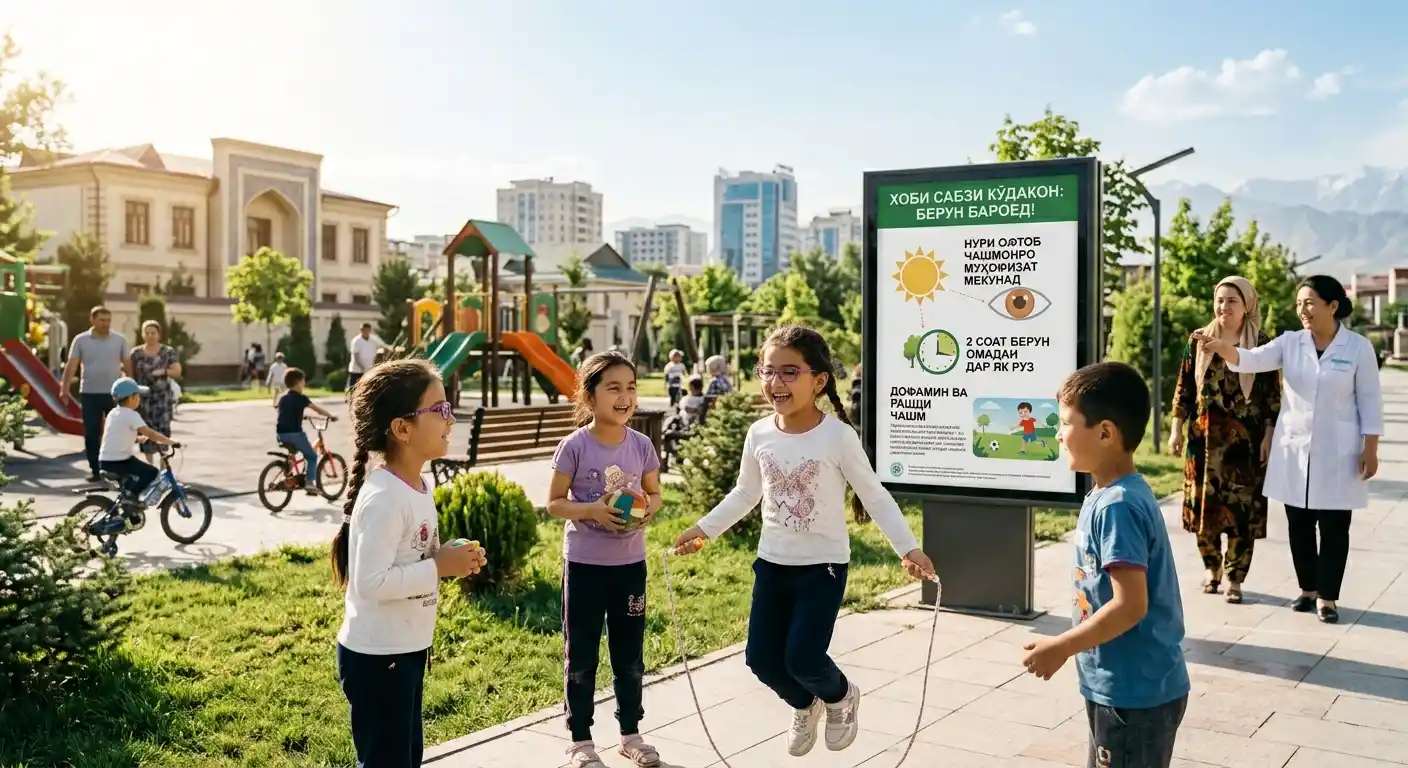
Every parent knows that too much screen time is bad for kids. But did you know that simply spending time outdoors — not doing anything special, just being outside — can protect your child from developing nearsightedness (myopia)?
A major new study published in the *British Journal of Ophthalmology* has confirmed this with some of the strongest clinical evidence yet.
## What the Study Found
Researchers analyzed data from the **Shanghai Time Outside to Reduce Myopia (STORM)** trial — a large, rigorous cluster-randomised study involving thousands of schoolchildren. The key finding:
> Children who spent more time outdoors were significantly less likely to develop myopia compared to those who stayed mostly indoors.
The protective effect was strongest in children with **hyperopia** (farsightedness) — a common condition in younger children where the eye hasn't fully grown yet. For children already showing early signs of myopia (called premyopia), the outdoor protection was still present but somewhat weaker.
This matters because premyopia is the stage where intervention is most critical — it's the last window before nearsightedness fully sets in.
## Why Does Being Outside Help?
You might wonder: what does going outside have to do with the shape of an eye?
The answer lies in **light intensity**. Outdoor light is many times brighter than indoor light, even on a cloudy day. This bright light triggers the release of **dopamine** in the retina — a chemical that regulates how the eyeball grows. When dopamine levels are sufficient, the eye grows at the right pace. When children spend most of their time indoors under dim artificial light, this natural regulation can go wrong, and the eyeball grows too long — causing myopia.
In simple terms: sunlight tells the eye to grow properly. Less sunlight means less control over that growth.
## How Much Outdoor Time Is Enough?
Based on current evidence, most eye health experts recommend:
- **At least 2 hours of outdoor time per day** for school-age children
- Time should be in **natural daylight** (not behind a window — glass blocks the beneficial UV spectrum)
- It doesn't matter what activity — playing, walking, or simply sitting outside all count
- Cumulative time throughout the day works just as well as one long stretch
For children in Dushanbe, this is genuinely achievable. Our city enjoys abundant sunshine for most of the year — a natural advantage many other regions don't have.
## Practical Tips for Parents
Here are easy ways to build more outdoor time into your child's routine:
1. **Walk to school** when possible, instead of taking a car or bus
2. **After-school outdoor play** before homework or screen time
3. **Weekend outdoor activities** — parks, sports, family walks
4. **Outdoor reading** on a bright day counts too
5. **Limit consecutive screen time** to no more than 30-45 minutes without a break
If your child wears glasses, don't let that stop them from going outside — outdoor time benefits children whether or not they already have myopia.
## What This Means for Families in Dushanbe
Myopia rates have been rising steadily in Tajikistan, as they have worldwide, driven largely by increased screen time and children spending more hours indoors studying. The good news is that one of the most effective preventive measures costs nothing and has no side effects.
Outdoor time is not a replacement for professional eye care — regular check-ups remain essential, especially if your child squints, sits very close to the screen, or complains of headaches after reading. But as a daily habit, it's one of the best things you can do for your child's vision before problems develop.
---
*Concerned about your child's vision? Schedule a comprehensive eye examination at our clinic on Bekhzod Street 14, inside Osse Optical. Call [+992 108 11 80 80](tel:+992108118080).*
Source: British Journal of Ophthalmology (2026-04-09)
#myopia
#pediatric
#prevention
#lifestyle
#outdoor
Back to Blog
Share: