Pediatric
Screen Time, Dry Eyes, and Myopia in Children: What Parents Need to Know
Dr. Sitora Karimova
2026-04-10
5 min read
More children than ever are being diagnosed with myopia — nearsightedness — and many of those same children are also suffering from dry eye syndrome. For years, these were seen as two separate problems. But growing research is revealing a significant connection: nearly half of all children with myopia also show signs of dry eye disease. Understanding this link can help parents take action early — before vision problems become harder to treat.
## How Common Is Myopia in Children Today?
Myopia is reaching near-epidemic proportions worldwide. It currently affects approximately 40% of the population in developed countries, and global rates are trending toward exceeding 50% in the coming decades. The most critical window for myopia development is between ages 5 and 12 — when the eye is still growing and the greatest jumps in nearsightedness typically occur.
The causes are well-established: excessive near-work (reading, screens, devices), too little time spent outdoors, and genetic predisposition all play a role. As children spend more time on tablets and smartphones, and less time playing outside, rates continue to climb.
## What Is Dry Eye Syndrome — and Can Children Get It?
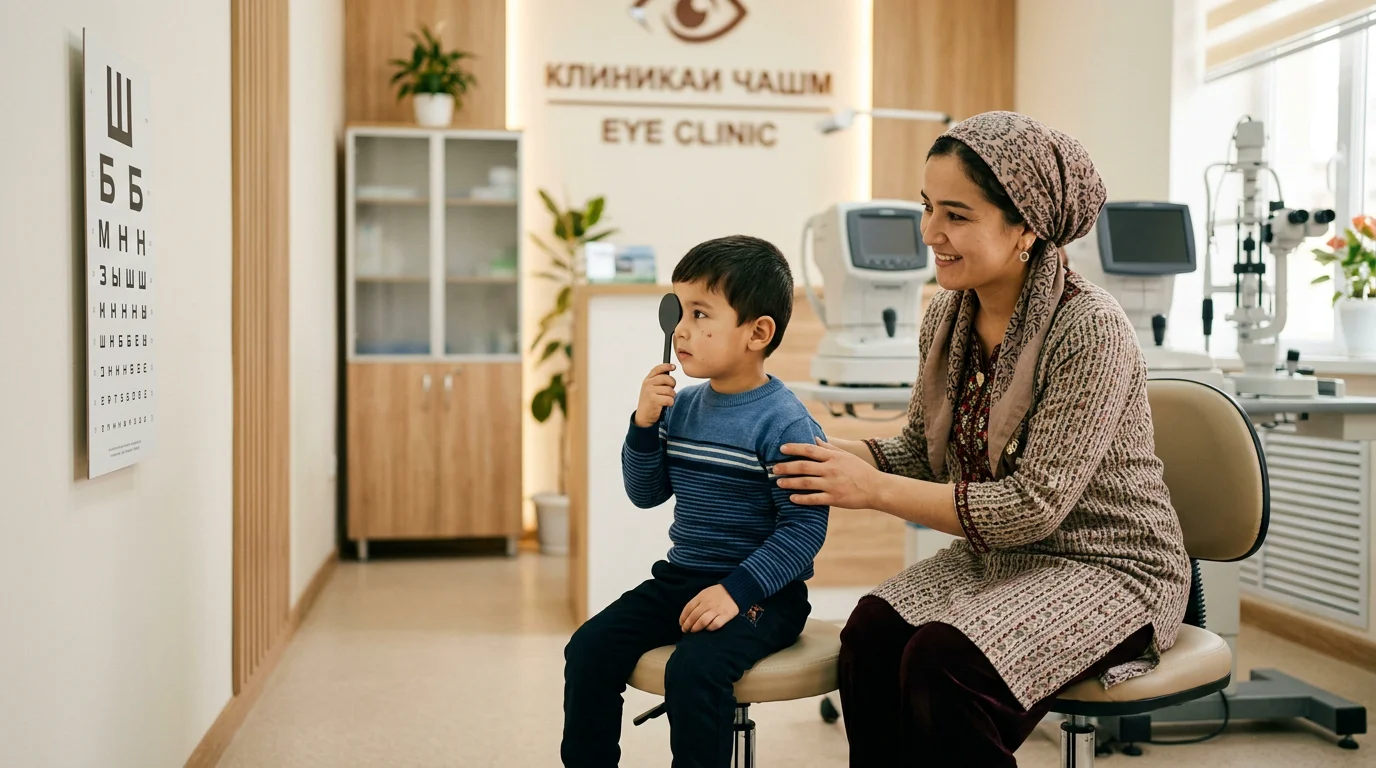
Many parents assume dry eye is an adult problem. It is not. Children who spend hours looking at screens blink far less often than they should — blinking is what spreads tears evenly across the eye's surface. Less blinking means tears evaporate faster, leading to dry, irritated eyes.
Signs of dry eye in children include:
- Frequent eye-rubbing
- Redness or a "sandy" or gritty feeling
- Blurry vision that clears up with blinking
- Sensitivity to light or wind
- Complaints of tired eyes after screen use or reading
Children are not always able to explain what they feel, so parents should watch for behavioral clues — squinting, avoiding reading, or irritability during homework.
## The Research: Nearly Half of Nearsighted Children Have Dry Eyes
A major meta-analysis published in *Heliyon* (ScienceDirect) reviewed 15 studies conducted over nearly four decades and found that **45.1% of myopic patients showed significant dry eye disease symptoms**. Children with myopia consistently showed shorter tear film breakup times — meaning their tears evaporate faster — and higher scores on the Ocular Surface Disease Index compared to non-myopic peers.
This is not a coincidence. Researchers confirmed a statistically significant association between the two conditions. In fact, both conditions appear to worsen each other: myopia correction through certain contact lenses can disrupt tear film stability, and dry eyes make it harder for the eye to stay comfortable and focused, which may accelerate the progression of nearsightedness.
## Why Does This Connection Exist?
Several mechanisms explain the overlap:
**Screen time as a shared driver.** Hours on a phone or tablet reduce blinking frequency by up to 60%, promoting dry eye. The same screen-focused lifestyle drives the near-work that is strongly associated with myopia progression.
**Contact lens use.** Many older children and teenagers use contact lenses to correct myopia. Lenses reduce oxygen flow to the cornea and disturb the tear film, making dry eye more likely.
**Atropine eye drops.** Low-dose atropine is one of the most effective treatments for slowing myopia progression in children. At the low doses used for myopia control (0.01%–0.05%), however, research shows the effect on dry eye is minimal and clinically insignificant for most children.
**Shared anatomy.** Myopic eyes are physically longer than normal, which may alter the way the eyelids interact with the eye surface, subtly affecting tear distribution.
## What This Means for Your Child's Treatment
The good news is that both conditions can — and should — be managed together. A major new clinical study, the **Myopia Treatment Study 2**, is currently enrolling children aged 5–12 across 18 pediatric eye care centers to find the optimal combination of treatments. The approaches being tested include low-dose atropine drops, Essilor Stellest myopia-control lenses, and combinations of both — alongside regular glasses.
Pediatric eye specialists note that if myopia can be slowed during the critical early years, the long-term risk of serious complications — including retinal detachment, glaucoma, and macular degeneration in adulthood — can be significantly reduced.
For children who also have dry eye, treatment is straightforward: preservative-free artificial tear drops, screen time limits, and lid hygiene routines can manage symptoms without interfering with myopia control.
## What You Can Do at Home
**Apply the 20-20-20 rule.** Every 20 minutes of screen use, look at something 20 feet (6 meters) away for at least 20 seconds. This gives the eyes a chance to relax and encourages blinking.
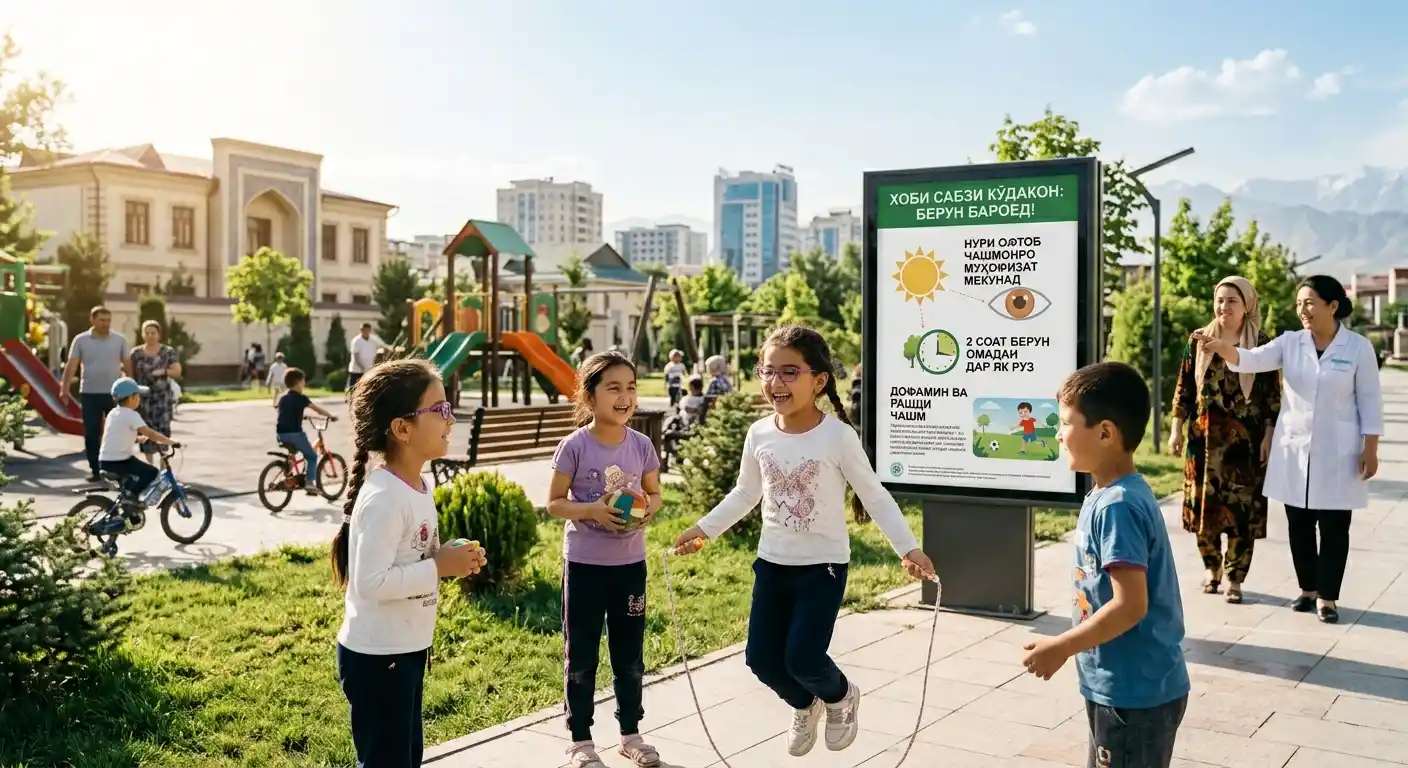
**Protect outdoor time.** Studies consistently show that children who spend 2 or more hours outdoors each day have significantly slower rates of myopia progression. Natural light and distance viewing are protective.
**Limit screen time, especially in the evening.** Blue light from screens close to bedtime strains the eyes and can disrupt sleep — both of which affect eye health.
**Watch for warning signs.** Squinting to see the board at school, frequent headaches, and sitting very close to the TV are early signs a child may need glasses. Do not wait until symptoms worsen.
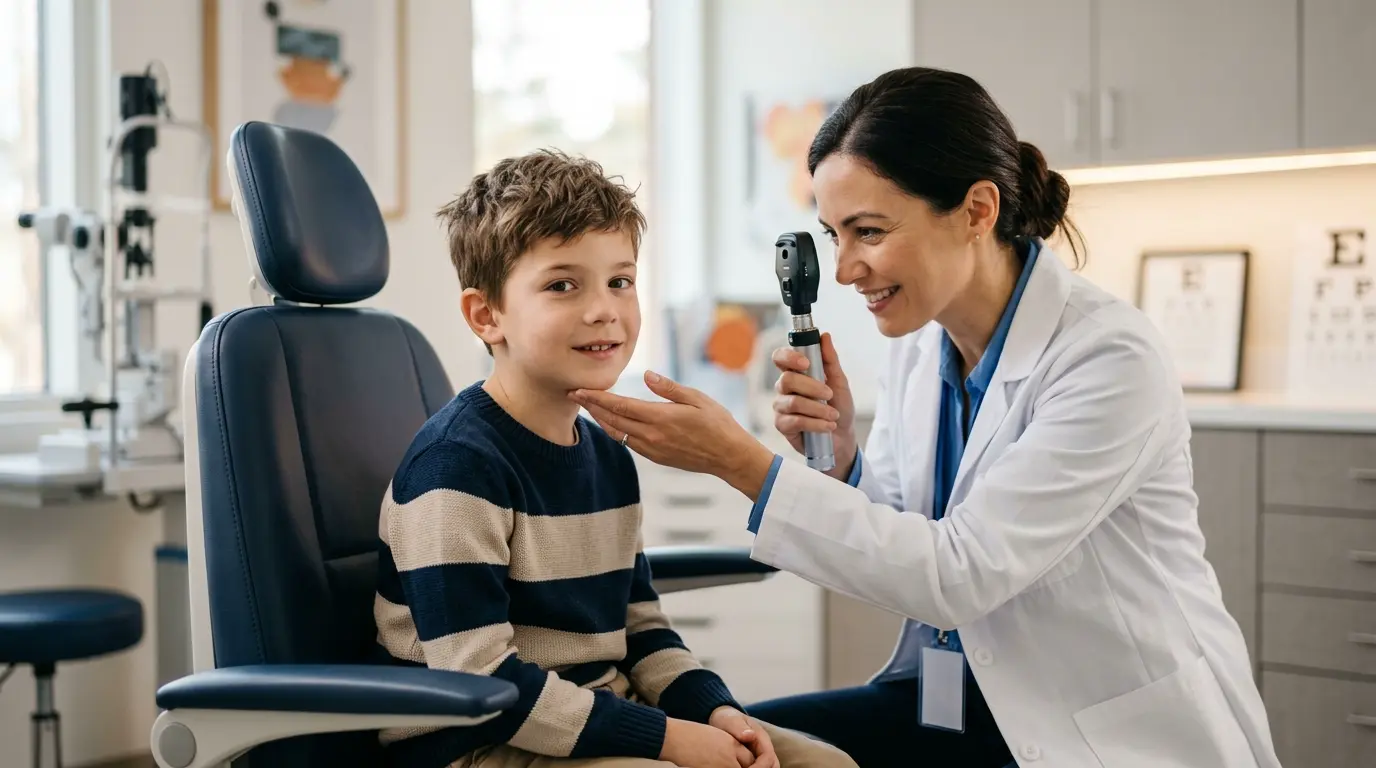
**Schedule annual eye exams.** Many children with early myopia or dry eye have no obvious symptoms. A comprehensive eye exam is the only reliable way to detect and monitor both conditions.
## What This Means for Families in Dushanbe
In Tajikistan, children face many of the same risk factors seen globally — heavy tablet and smartphone use, reduced outdoor time especially in winter months, and increasing academic screen-based work. Yet access to specialized pediatric eye care remains limited, making early assessment all the more important.
Dr. Karimova's clinic is equipped to screen children for both myopia and dry eye in a single visit. Early intervention — whether through myopia-control lenses, low-dose atropine therapy, or dry eye treatment — can make a meaningful difference in how your child's vision develops over the next decade.
*If your child squints, rubs their eyes often, or avoids reading, schedule a comprehensive eye exam. Call [+992 108 11 80 80](tel:+992108118080).*
Source: Heliyon / ScienceDirect — "Relationship between dry eye disease and myopia: A systematic review and meta-analysis" (2024-12-01)
#myopia
#dry eye
#children
#screen time
#prevention
#pediatric
Back to Blog
Share: