Prevention
What Your Eye Doctor Can Tell About Your Overall Health
Dr. Sitora Karimova
2026-06-04
5 min read
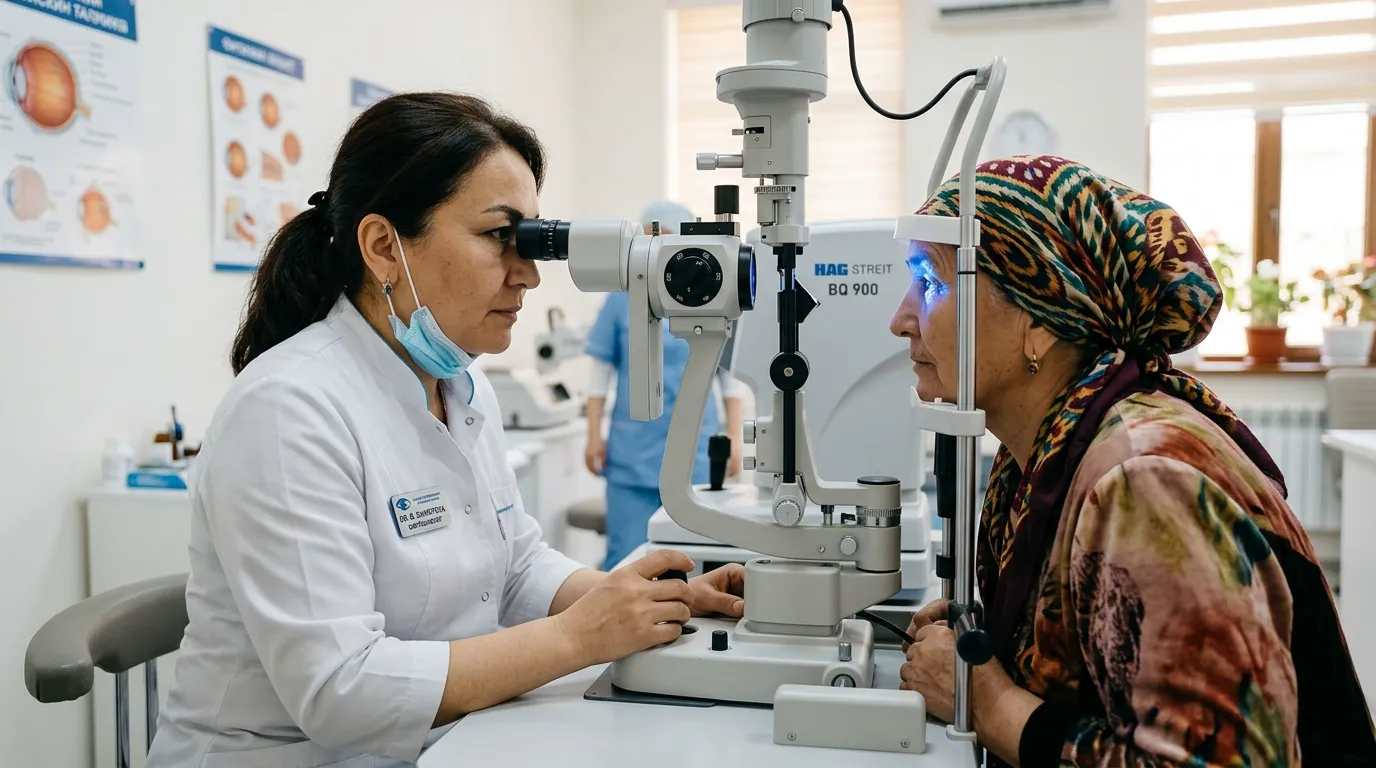
When most people think about a visit to the ophthalmologist, they imagine reading letters off a chart or getting a new glasses prescription. But a comprehensive eye exam does something that almost no other routine check-up can: it lets a doctor look directly at living blood vessels, nerves, and tissue — without a single incision.
That window into the body's interior can reveal far more than whether you need reading glasses.
## Your Eyes and Your Heart
The retina — the light-sensitive layer at the back of your eye — is fed by a dense network of tiny blood vessels. Because these vessels are small and easily viewed under magnification, they often show the earliest visible signs of cardiovascular stress long before symptoms appear elsewhere.
During a dilated eye exam, your doctor may notice:
**Microscopic retinal spots** — sometimes called "cotton wool spots" — that suggest a tiny blood vessel has been blocked. These micro-infarctions are more common in people with heart disease and can be an early indicator that the cardiovascular system is under strain.
**Yellow or blue rings around the cornea** (arcus senilis) can point to elevated cholesterol, particularly in people under 60. Similarly, fatty deposits along the retinal blood vessels may signal high lipid levels in the bloodstream.
**Unusual bleeding, narrowing, or "nicking" of retinal vessels** is often associated with hypertension. High blood pressure forces blood vessel walls to thicken and stiffen — changes that show up clearly in the retinal vasculature.
None of these findings are a definitive cardiac diagnosis, but they are strong signals worth investigating further with a cardiologist or general practitioner.
## Signs of Brain Conditions
The optic nerve connects the eye directly to the brain, which means the eye exam is one of the few places where a doctor can observe nervous tissue without imaging equipment.
Swelling of the optic nerve head (papilledema) can indicate increased pressure inside the skull — a serious sign that may be linked to a brain tumor, intracranial hypertension, or other neurological conditions. An aneurysm pressing on surrounding structures may cause one pupil to become abnormally dilated or slow to react to light.
These are rare findings, but because they are observable during a standard dilated exam, catching them early can be genuinely life-saving.
## Autoimmune Diseases and Inflammation
The immune system affects the entire body — and the eyes are no exception. Conditions like lupus erythematosus, rheumatoid arthritis, and inflammatory bowel disease can all cause changes inside the eye.
Lupus, for example, may cause abnormalities in the retinal blood vessels or trigger inflammation of the uvea (uveitis) — the middle layer of the eye wall. Persistent redness, light sensitivity, or blurred vision that doesn't respond to ordinary treatment can sometimes be the first obvious sign of an underlying autoimmune condition that hasn't yet been formally diagnosed.
When your eye doctor refers you to a rheumatologist after a check-up, it isn't an overreaction — it may be the most important referral you receive that year.
## Catching Eye Diseases Before Symptoms Appear
Beyond systemic conditions, the exam is also the primary way to detect serious eye diseases that develop silently.
**Glaucoma** — sometimes called "the silent thief of sight" — is a progressive condition in which elevated pressure damages the optic nerve. Most people have no pain and no awareness of their peripheral vision narrowing until significant damage is done. An eye exam measures intraocular pressure and examines the optic nerve directly, catching glaucoma at a stage when treatment can genuinely slow or halt its progression.
**Age-related macular degeneration (AMD)** is the leading cause of central vision loss in adults over 50. Early AMD produces no symptoms — no blur, no distortion — yet the structural changes in the macula are clearly visible during a dilated exam. Identifying these changes early opens a window for protective lifestyle measures and, in some forms, medical treatment.
**Diabetic retinopathy** is another condition that can be detected before a person even knows they have diabetes. The retinal blood vessel damage caused by elevated blood sugar follows a recognizable pattern that a trained eye doctor can identify.
## How Often Should You Have an Eye Exam?
For adults with no known eye conditions or risk factors, a comprehensive exam every one to two years is generally recommended. People over 40, those with diabetes or high blood pressure, anyone with a family history of glaucoma or macular degeneration, and children at key developmental stages should be examined more frequently.
Children deserve a special mention: the visual system develops rapidly in the first years of life. Conditions like amblyopia ("lazy eye") and strabismus (misaligned eyes) must be caught and treated early — ideally before age 7 or 8 — to prevent permanent vision loss. A child who has never struggled with reading may still have a significant vision problem they have simply adapted around.
## What to Expect at a Comprehensive Exam
A full examination at our clinic includes:
- Visual acuity testing (the familiar letter chart)
- Refraction to determine your precise prescription
- Eye pressure measurement (tonometry)
- Dilated fundus exam — drops widen the pupil so the doctor can examine the retina, optic nerve, and blood vessels in detail
- Assessment of the anterior segment (cornea, lens, iris)
- Review of your full medical and family history
The entire process takes about 45–60 minutes. The dilating drops cause temporary light sensitivity and slightly blurred near vision for two to three hours, so it is a good idea to bring sunglasses.
## What This Means for Patients in Dushanbe
In Tajikistan, many serious conditions — from hypertension to early glaucoma — go undetected for years simply because people do not attend regular check-ups. A comprehensive eye exam is one of the most accessible, non-invasive ways to get a meaningful snapshot of your overall health in a single appointment.
If your last comprehensive eye exam was more than two years ago — or if you have never had one — now is a good time to schedule it.
*Your eyes can tell us a great deal about what is happening throughout your body. Book a comprehensive eye exam at our clinic in Dushanbe and let's take a closer look together. Call [+992 108 11 80 80](tel:+992108118080).*
Source: Kadrmas Eye Care New England (2026-06-01)
#eye exam
#prevention
#glaucoma
#heart health
#systemic health
#macular degeneration
Back to Blog
Share: