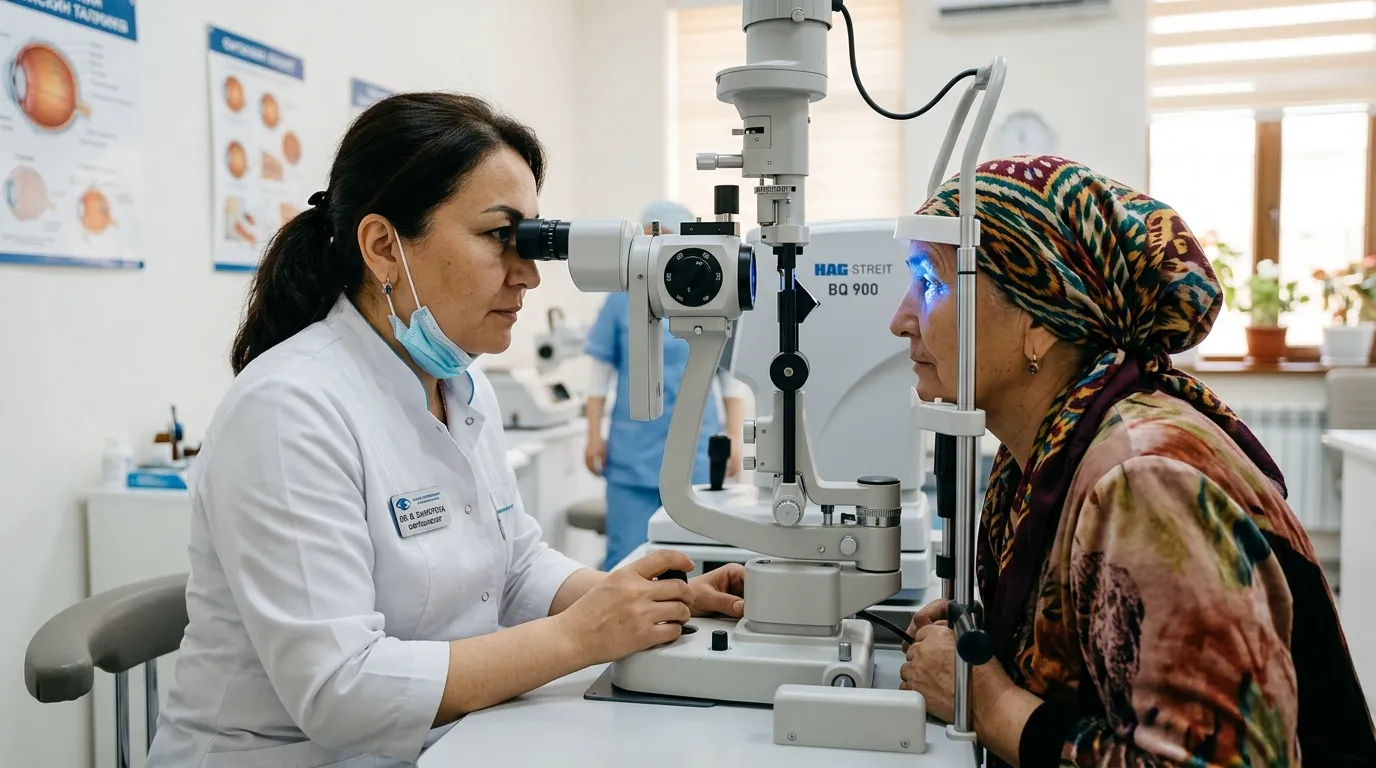
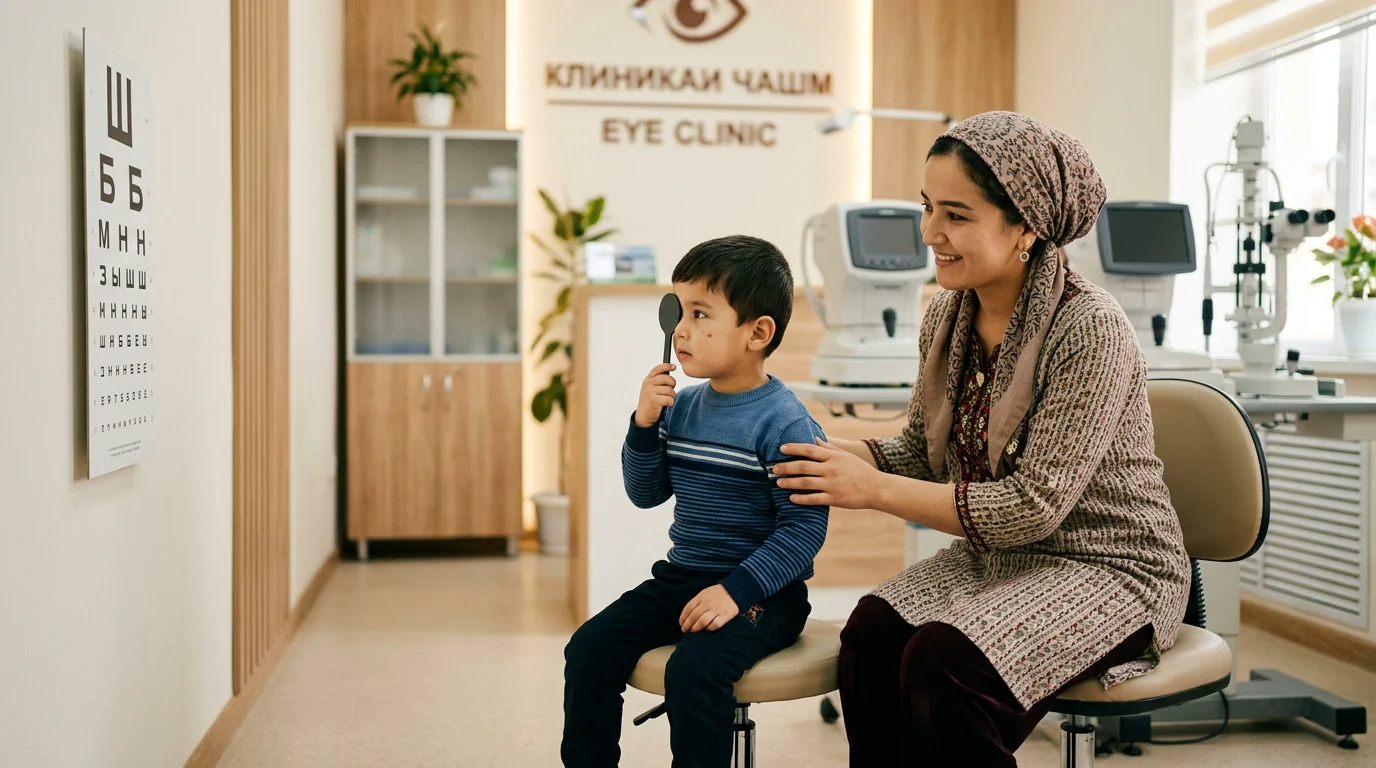
Don't Fall This Autumn: How Your Vision Affects Your Balance
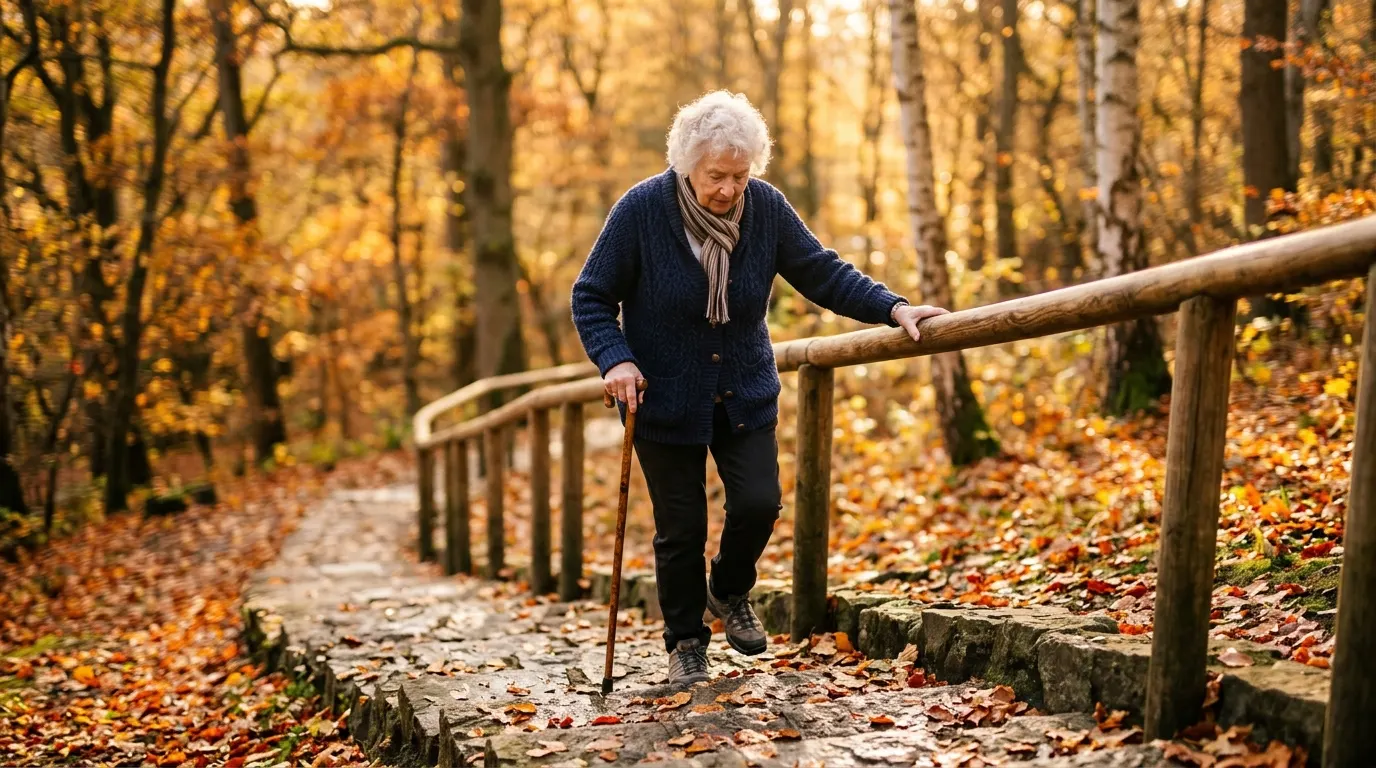
When someone stumbles on a curb or feels unsure on the stairs, we often shrug it off: "It's just age." But balance is not only a question of strong legs and a healthy inner ear. Your eyes are working every second you walk, and when your vision is not at its best, your steadiness can suffer too.
Autumn is a good moment to talk about it. The days get shorter, the pavements get wet and covered with leaves, and winter ice is not far behind.
Your Eyes Are Part of Your Balance System
Staying upright depends on several systems working together: the inner ear, the muscles and joints, and the eyes. The brain combines all of this information to decide where to put your next step.
Your eyes tell the brain where the ground is, how far away an object is, and whether the surface ahead rises or drops. If that picture is blurry or incomplete, the brain has less to work with, and walking becomes less confident.
How Weak Vision Makes Walking Harder
Several parts of vision matter for safe movement, not just how well you read the letters on a chart:
- Sharpness. Blurry vision makes it harder to notice a curb, a step or an obstacle on the path.
- Depth perception. This is the ability to judge distances. Without it, a step can look closer or farther than it really is.
- Contrast sensitivity. A grey step on a grey pavement, or a puddle on wet asphalt, is easy to miss when contrast vision is reduced.
- Vision in dim light. At dusk or in a poorly lit entrance, weak low-light vision can make familiar places feel unfamiliar.
Common causes include glasses that no longer match your eyes, cataracts and glaucoma. Many of them develop slowly, so people get used to the change without noticing it.
Why Autumn Makes It Worse
Even good eyesight is tested in this season:
- The sun sets earlier, so many people walk home in the dark or at dusk.
- Wet leaves and damp surfaces are slippery and hide uneven ground.
- Rain and low sun cause glare and reflections that make it harder to read the ground.
If your vision is already slightly reduced, these conditions add up.
That is why a walk that felt easy in July can suddenly feel risky in November. It does not mean you have become careless. The conditions simply ask more of your eyes, and eyes that were coping well in summer may no longer keep up. A gentle check-up before the dark months begin is far easier than recovering from a fall.
Warning Signs Worth Mentioning to an Eye Doctor
Pay attention if you notice that:
- it is hard to see curbs, steps or changes in level;
- stairs or unfamiliar places make you nervous;
- you feel uncomfortable or unsure in dim light;
- night driving has become difficult;
- your depth perception or clarity of vision seems different.
These signs do not always mean there is an eye disease. But they are worth raising with a doctor, because the cause is often something we can check and often improve.
What This Means for Patients in Dushanbe
In our city, uneven pavements, high curbs, steep stairs in older buildings, and poorly lit courtyards and entrances are part of daily life. Add the early dark of autumn and the ice of winter, and good vision becomes a real safety factor, especially for older family members.
If a parent or grandparent has recently become more cautious about stairs, stopped going out in the evening, or "just stumbles more," do not assume it is only age. An eye examination is a simple first step, and sometimes the answer is as easy as new glasses.
Simple Steps to Stay Steady
- Have a comprehensive eye exam regularly. It can find changes before you notice any symptoms.
- Do not write off vision changes or unsteadiness as normal aging. Mention them to your doctor.
- Update your glasses when your prescription changes, and give new glasses a few days to get used to.
- Improve the lighting at home, on stairs and in hallways, especially for older relatives.
- Take extra care in the dark and on wet days: wear shoes with a good grip and slow down on stairs.
- Talk to a healthcare provider about balance problems. Dizziness and unsteadiness can have many causes, and your eyes are only one of them.
The Takeaway
Good balance starts with good information reaching the brain, and a big part of that information comes through your eyes. A regular eye exam is one of the easiest ways to protect yourself and your loved ones from a fall this autumn and winter.
If you or a family member feels less steady on stairs, in the dark or on uneven ground, have your vision checked. Call +992 108 11 80 80.
Source: Simon Eye (2026-10-14)